Choosing where your child spends their earliest, most formative years is one of the biggest decisions you’ll make as a parent. We know the feeling, that mix of excitement for their new adventure and the quiet tug at your heart as you wonder, “Will they be known here? Will they be safe? Is this really the best place for them?” When you’re scrolling through endless search results, it’s easy to feel overwhelmed. You aren’t just looking for childcare; you’re looking for a partner in your child’s growth.
If you have ever wondered how to know if a preschool is good, you are not alone. Most parents are not looking for “perfect.” They are looking for safe. They are looking for warm. They are looking for a place where their child can grow steady roots and still have room to explore.
Below are seven signs of a high-quality preschool you can use on tours, during phone calls, and even when you are reading a handbook at your kitchen table.
Preschool Quality Checklist: a Simple Way to Evaluate any Program
Before we get into the seven signs, it helps to start with a quick mindset shift.
A high-quality preschool is not defined by one single feature (a brand-new building, a fancy app, or a long list of extras). Quality usually shows up as many small things done consistently well, day after day. That is why a simple checklist approach works.
Here are the two foundational items we recommend adding to the top of your preschool quality checklist.
1) The program is transparent about safety, oversight, and daily routines
You should not have to dig for basic information.
A strong program can clearly explain how children are checked in and released, how staff supervise transitions (playground, bathroom, hallway), how illness policies work, and how classrooms are kept secure.
Even if the program’s setting is different (licensed center, childcare ministry, home-based program), the best programs can tell you what oversight applies and what standards they follow. The point is not “having an answer that sounds nice.” It is being willing to walk you through how safety is handled in real life.
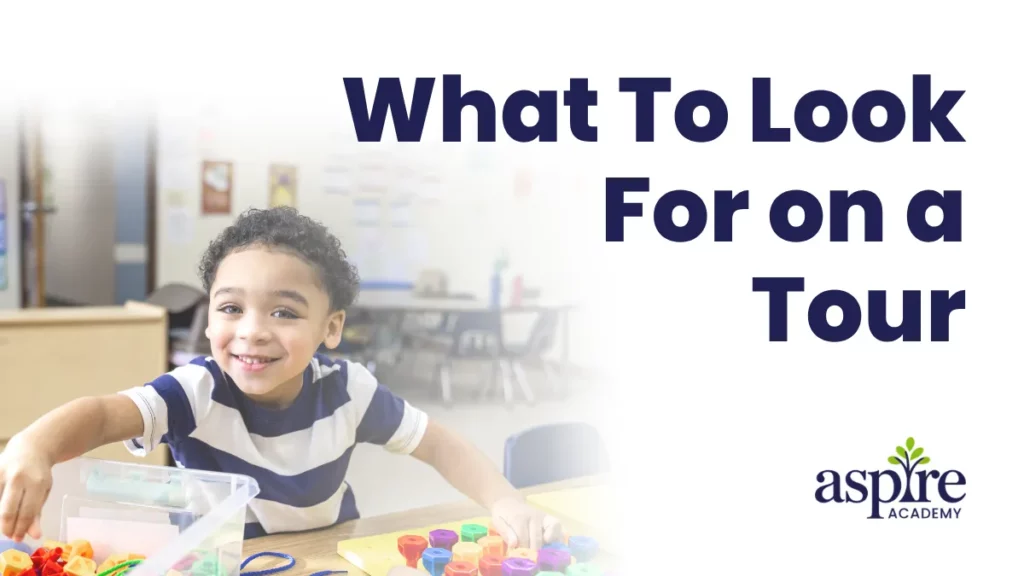
If you want a practical tour tip, the Childcare.gov “Look, Listen, and Ask” guidance encourages families to visit in person and observe how a program runs day to day, including interactions and routines. (Childcare)
2) Ratios and group size support calm, responsive care
You do not need to memorize ratio charts to benefit from this. Just remember the simple idea: when teachers are stretched too thin, quality drops.
ZERO TO THREE recommends a ratio of 1 adult for every 4 children under the age of three, with a maximum group size of 8 children in center-based settings (ZERO TO THREE). Lower adult-to-child ratios and manageable group sizes make it easier for teachers to respond quickly, build relationships, and actively supervise
What to look for on a tour:
- Children are engaged, not wandering without purpose.
- Teachers are present with children, not constantly “putting out fires.”
- The room feels busy, but not chaotic.
Signs of a High Quality Preschool: What You Should See on a Tour
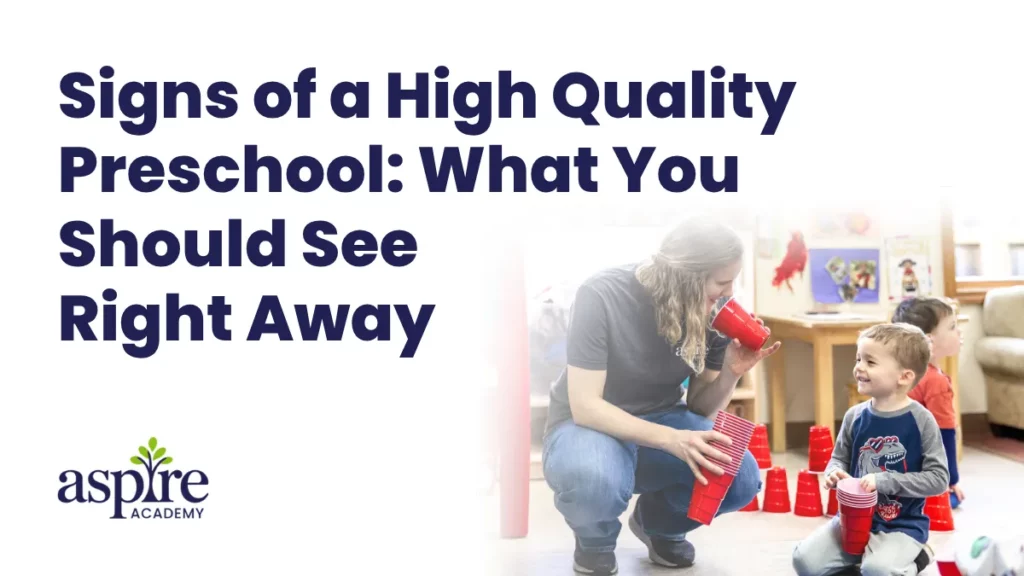
Now, let’s move into the signs you can actually see and feel when you walk into a classroom.
3) Teachers build relationships through warm, responsive interaction
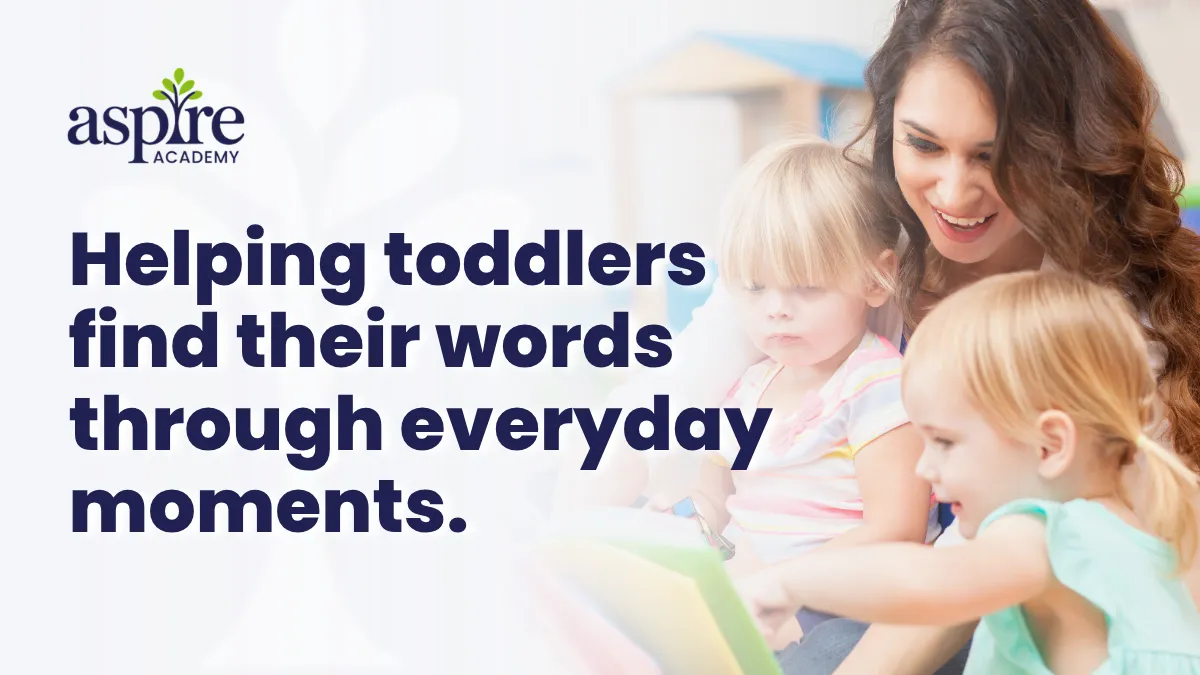
One of the clearest quality signals is how teachers respond to children in ordinary moments. A child who is unsure at drop-off. A disagreement over a toy. A toddler who is frustrated because they cannot communicate what they want.
High-quality classrooms are not quiet because children are “perfect.” They are calm because adults are steady.
Research-backed child development frameworks often describe the power of responsive, back-and-forth interaction. Harvard’s Center on the Developing Child calls this “serve and return,” and explains how those exchanges help build strong foundations for learning and social-emotional growth. (developingchild.harvard.edu)
Resources also highlight that children learn best through rich, responsive social interactions that build bonds and shared attention.
Tour tip: Listen for teachers getting down to a child’s eye level, naming emotions, and guiding behavior with respect.
4) Play is treated as real learning (not filler)
Sometimes parents worry when they see play because they want kindergarten readiness. A strong preschool will help you see that the two belong together.
Quality programs do not choose between play and learning. They use play as a way to build language, problem-solving, cooperation, and early academic skills in ways that actually stick.
The American Academy of Pediatrics, AAP, underscores the importance of play in a child’s development and relationships. They highlight that play is not just fun but a vital tool for exploration, helping children meet developmental milestones and build essential life skills.
Tour tip: Look for teachers who are not just supervising play, but extending it with thoughtful prompts:
- “What do you think will happen if…?”
- “Tell me about your plan.”
- “How could we solve that together?”
5) The environment is intentionally arranged for independence and exploration
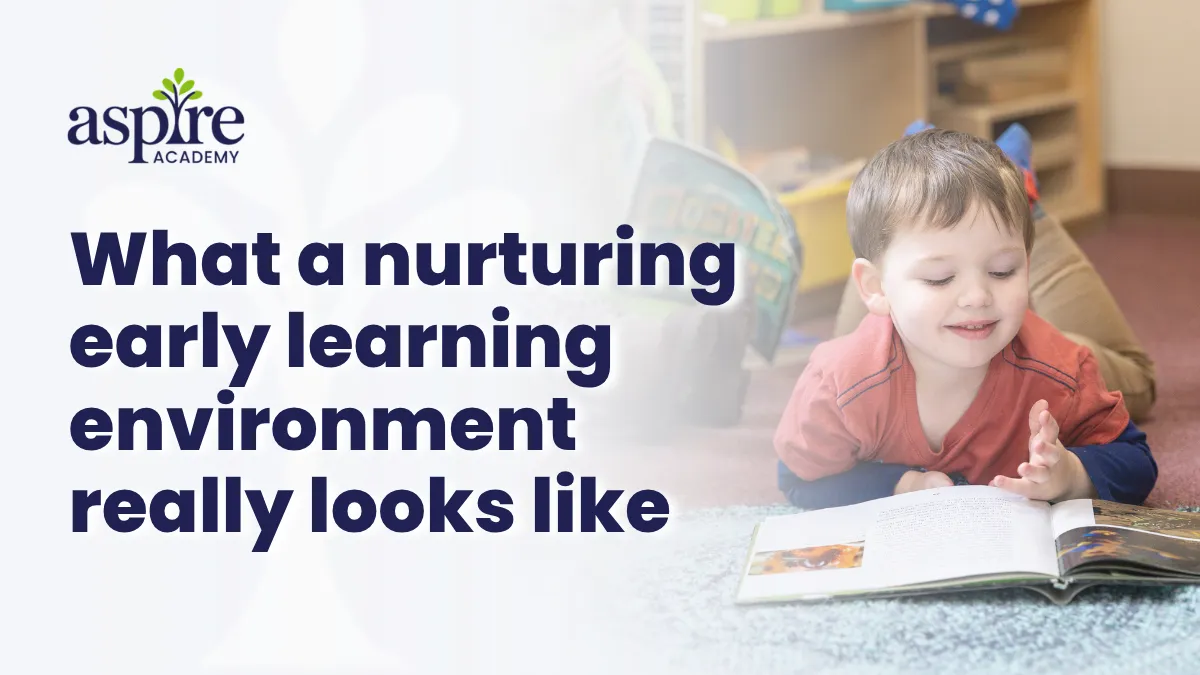
High-quality preschool rooms are not random collections of toys. They are set up so children can find materials without always asking an adult, and then clean up with clear routines. Kids should be able to make choices within consistent boundaries and rotate through learning areas without constant confusion.
This is one of those details that feels small until you realize what it does for a child’s confidence. Children begin to think, “I can do this,” and that belief grows.
Tour Tip: Look for low, open shelving with materials stored in clear, labeled bins. Ask how children access different learning centers and what the cleanup routine looks like.
Curriculum + Communication + Continuous Growth: The 3 Must-Haves of a Good Preschool Program
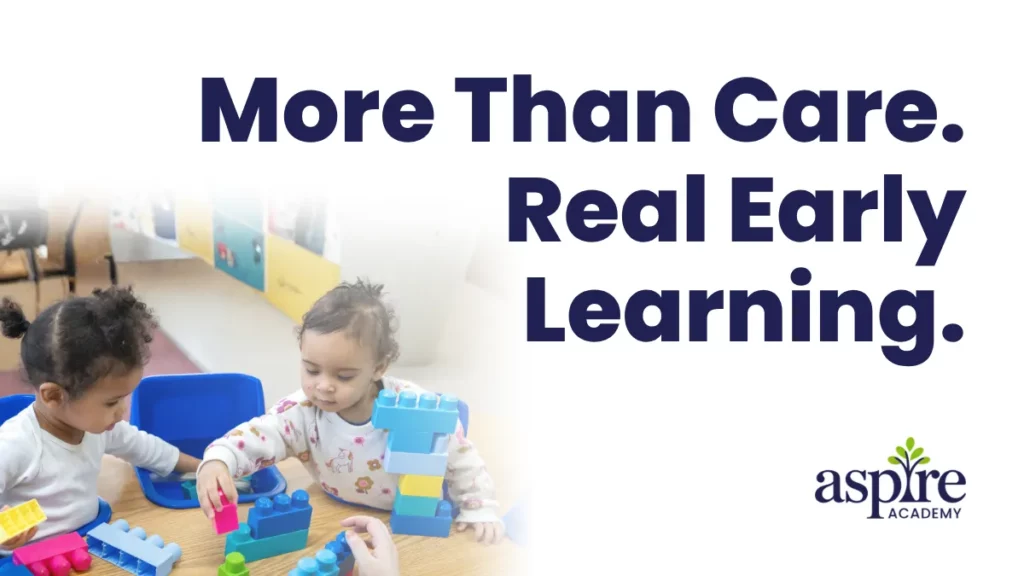
This section is where the quality of a preschool program becomes even clearer, because you are looking at the “why,” not just the “what.”
6) Learning is developmentally appropriate and tied to how children grow
A good preschool program should be able to explain how learning matches child development.
That usually includes:
- Language-rich routines (songs, stories, conversation all day)
- Hands-on early math (patterns, counting in real life, measuring in play)
- Early literacy foundations (not worksheets for three-year-olds)
- Social-emotional learning (sharing, empathy, problem-solving)
If you want a helpful anchor for what “typical growth” can look like by age, the CDC’s milestone resources can be a useful reference point for families. (CDC)
A strong program will also welcome your questions about support:
- “What happens if my child needs extra help with transitions?”
- “How do you handle biting?”
- “How do you support speech and language development in the classroom?”
7) Families are treated as true partners, not spectators
High-quality programs do not only communicate when something is wrong. They create steady, respectful communication that helps you understand your child’s day and feel connected to what they are learning.
Look for:
- Clear daily or weekly updates (even if simple).
- A culture of “we will tell you what you need to know.”
- Teachers who can share a real observation about your child, not just “good day!”
This matters because children do best when home and school work together. Family engagement is widely recognized as a quality marker in early childhood settings, and many quality frameworks include it as a core indicator. (SAGE Journals)
8) The program can show how they improve over time
This last sign is subtle, but powerful.
High-quality programs do not pretend they have everything “solved.” Instead, they can explain how they stay strong:
- Ongoing teacher training
- Coaching or mentoring
- Reviewing safety procedures
- Updating curriculum and classroom practices
- Listening to parent feedback
When a program takes growth seriously, you usually see it in the details: classrooms run smoothly, teachers seem supported, and the environment feels consistent.
A few questions to bring on every preschool tour
If you want a simple script, here are questions that tend to reveal real quality quickly:
- “What do you do when a child is struggling socially or emotionally?”
- “How do you help children build independence without rushing them?”
- “How do you communicate with families, and how often?”
- “What does kindergarten readiness mean here?”
- “How do you support safe, active supervision during transitions?”
If answers are clear, specific, and consistent, that is a good sign.
A final thought for parents making this decision
The best preschool for your child will feel like a place where they are known.
Not managed. Not rushed. Known.
High-quality preschool is not about perfection. It is about steady, intentional care that helps children grow into who they are becoming, building confidence through safe exploration, learning kindness through relationships, and keeping curiosity alive.
That is also why many families look for a program that offers more than basic care. They look for a place with a clear purpose, a warm and intentional environment, and a team that understands how early childhood shapes the years ahead. At Aspire Academy, that commitment can be seen in the way the school nurtures Character, Confidence, and Curiosity, creates a thoughtfully designed environment for growth, and supports children through a whole-child approach rooted in meaningful relationships.
If you are exploring preschools in the Fort Wayne area, Aspire Academy welcomes families to tour, ask questions, and experience what a high-quality preschool can feel like in everyday practice.
Schedule a tour with Aspire Academy to learn more about our approach to early childhood education.